Dubai has always been known for pushing boundaries when it comes to innovation and technology. Staying true to its futuristic vision, Dubai’s Roads and Transport Authority (RTA) has unveiled a groundbreaking Dubai AI-powered traffic signal system aimed at transforming how traffic flows across the city. This bold move not only signals a leap toward smarter mobility but also showcases the city’s unwavering commitment to becoming a global leader in smart city solutions.
Why Dubai needed an AI-powered traffic signal system
Dubai is a fast-growing city with a population that continues to rise year after year. With its reputation as a global business hub and tourist magnet, the roads are constantly busy. As of 2025, Dubai’s population has crossed 3.6 million, and the city regularly hosts over 16 million tourists annually.
Traffic congestion has always been one of the major challenges. According to reports, residents spend an average of 80 hours a year stuck in traffic jams. This not only causes frustration among drivers but also impacts productivity and increases carbon emissions.

Recognizing these issues, Dubai’s RTA decided it was time to adopt a more intelligent, adaptive system that could learn from real-time data and make decisions instantly. Thus, the Dubai AI-powered traffic signal system was born.
How the Dubai AI-powered traffic signal system works
The newly launched system uses advanced artificial intelligence algorithms to monitor and analyze real-time traffic conditions. It collects data from a wide range of sources, including:

- Smart sensors installed at intersections
- CCTV cameras providing live feeds
- Connected vehicle data, including speed and movement patterns
- Weather and road condition data
Once the data is collected, the AI processes it to understand traffic density, identify patterns, and predict possible congestion points. The system can then automatically adjust signal timings to improve traffic flow, reduce waiting times at intersections, and even prioritize emergency vehicles when needed.
Key features of the AI-powered traffic system
The Dubai AI-powered traffic signal system stands out due to several advanced features that make it superior to traditional traffic management methods.
Real-time adaptive signal control
Instead of following fixed schedules, the signals now change dynamically based on actual traffic conditions. This means that during peak hours or unexpected traffic surges, the system can immediately respond and reduce congestion.
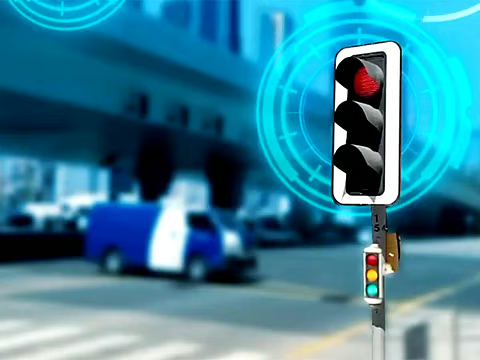
Priority for emergency and public transport
Emergency vehicles such as ambulances and fire trucks are given priority by automatically turning signals green along their route. This can help save lives by reducing response times. Additionally, buses and trams can receive signal priority to promote public transport usage.
Predictive traffic management
Thanks to its ability to analyze historical and live data, the system can predict future traffic congestion points and proactively adjust signals to prevent bottlenecks before they even happen.
Reduced carbon emissions
By improving traffic flow and reducing idle times, the system significantly cuts down vehicle emissions. This supports Dubai’s broader sustainability goals, such as achieving net-zero carbon emissions by 2050.
Continuous learning and improvement
The AI system is designed to continuously learn from new data. As it operates, it gets smarter over time, improving its accuracy and efficiency.
Benefits to drivers and the community
The Dubai AI-powered traffic signal system is not just a technological marvel; it brings real, tangible benefits to everyday life.
- Shorter travel times: Drivers can expect quicker commutes and fewer frustrating delays.
- Increased safety: With smoother traffic flow, there is a lower chance of accidents at intersections.
- Cost savings: Reduced fuel consumption translates to financial savings for drivers.
- Improved air quality: Lower emissions contribute to a cleaner, healthier environment for all residents and visitors.
Alignment with Dubai’s smart city vision
Dubai has long aimed to be a leading smart city globally. From introducing autonomous taxis to AI-driven police patrols, the city constantly experiments with technology to improve urban living standards.
The Dubai AI-powered traffic signal system is another milestone in this journey. It supports several major initiatives, such as:
- Dubai 2040 Urban Master Plan: Aims for a more sustainable and livable city.
- Smart Dubai 2021 Strategy: Focuses on transforming Dubai into the world’s happiest and smartest city.
- Dubai Clean Energy Strategy 2050: Seeks to make Dubai a global center for clean energy and green economy.
Challenges faced during development
Launching a sophisticated AI system across a sprawling city like Dubai was no easy task. The RTA had to overcome various challenges.
- Integrating with existing infrastructure: Many of Dubai’s intersections were built years ago and had to be retrofitted with modern sensors and connectivity solutions.
- Data privacy and security: Ensuring the collected data is secure and used responsibly was a top priority.
- Public acceptance: Educating drivers and the community about how the new system works and its benefits was essential for smooth adoption.
Despite these hurdles, the RTA successfully rolled out the system on schedule, showcasing the city’s organizational strength and forward-thinking leadership.
The role of AI and big data in future mobility
The Dubai AI-powered traffic signal system is just the beginning of how artificial intelligence and big data can reshape urban mobility. In the future, Dubai aims to integrate this system with other smart city technologies, such as:
- Connected autonomous vehicles: AI traffic signals can communicate directly with self-driving cars to optimize movement even further.
- Smart parking solutions: Integrating traffic signals with parking data can guide drivers to available spots more efficiently.
- Dynamic congestion pricing: AI can help implement real-time toll adjustments based on congestion levels, encouraging off-peak travel.
By building such interconnected systems, Dubai hopes to create a seamless, fully integrated urban mobility network.
Global implications and leadership
With the Dubai AI-powered traffic signal system, the city positions itself as a pioneer on the global stage. Many major cities around the world struggle with congestion and pollution, and Dubai’s model can serve as a blueprint for others.
By proving that AI can effectively manage complex urban traffic networks, Dubai sends a strong message that advanced technology can make cities more livable and sustainable.
Conclusion
The launch of the Dubai AI-powered traffic signal system marks a major milestone in the city’s journey toward becoming a global smart mobility leader. By harnessing cutting-edge AI and data analytics, Dubai not only aims to improve daily commutes but also sets an inspiring example for cities worldwide.
As the system evolves, residents and visitors can look forward to smoother, safer, and more sustainable travel experiences — a true reflection of Dubai’s vision for the future.
Follow us on Instagram: UAE STORIES
Read More: Unique Souvenirs to Buy in the UAE