The AI boom strains global subsea cable networks, pushing the world’s internet infrastructure to its limits and forcing operators to urgently lay new ocean routes. As artificial intelligence rapidly expands, it demands massive amounts of data to travel around the globe, far beyond what many imagined even a few years ago.
Experts warn that if new cables are not deployed soon, we may face slower connections, higher costs, and regional digital divides. Let’s explore why this is happening, what it means for global connectivity, and how operators are scrambling to save the internet from AI overload.
Why the AI boom is overwhelming subsea cable networks
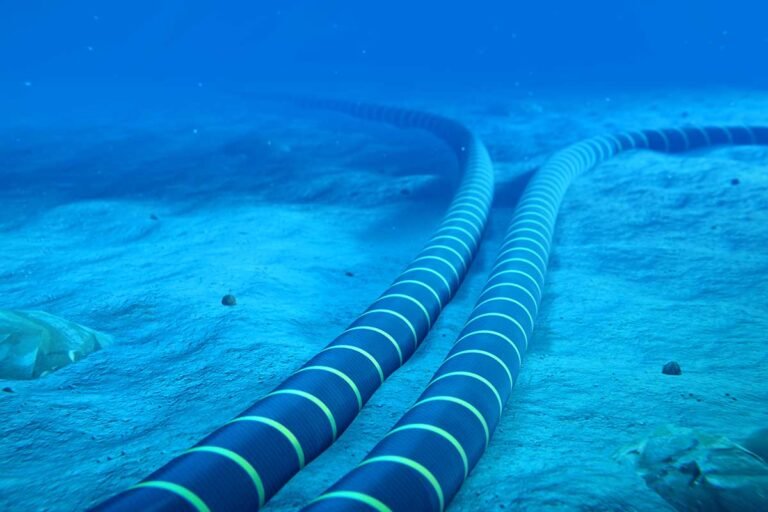
Subsea cables, the hidden backbone of the internet, carry over 95% of global data. Stretching across oceans for thousands of kilometers, these fiber-optic lines connect continents and enable everything from video calls to streaming and real-time financial transactions.

Until recently, these cables managed to handle growing internet usage. But with the rise of AI, data demands have exploded. Modern AI systems need to process and transfer enormous datasets between data centers worldwide. Training a large language model, for example, can involve moving petabytes of data back and forth repeatedly.
According to industry analysts, global data center traffic is projected to grow over 25% annually, and AI alone may account for more than half of that growth by 2027. As a result, some cables are now running at or near capacity, creating bottlenecks that threaten the smooth flow of internet traffic.

Which regions are most affected by the AI-driven data surge?
While Europe and North America have relatively robust subsea infrastructure, many regions are vulnerable.
Asia-Pacific, with booming tech hubs like Singapore, Tokyo, and Sydney, is seeing skyrocketing demand. The region already faces capacity challenges, especially for routes connecting to the US.
The Middle East is experiencing increasing investment in AI and cloud services, putting pressure on connections to Europe and Asia.
Africa is also feeling the strain. As more African nations adopt AI tools and cloud platforms, there’s a growing demand on their limited undersea capacity.
This uneven distribution risks widening the global digital divide. Wealthier regions can upgrade quickly, while developing nations may lag and face slower internet speeds or higher connectivity costs.
Cable firms scramble to open new ocean routes
To counter the pressure, cable operators are working at full speed to build new routes, especially across underserved regions. Recent announcements reveal plans for at least 20 new subsea cables over the next five years. Some of the most notable projects include:
The Bifrost Cable System, which connects Singapore, Indonesia, the Philippines, and the US west coast. This will provide an alternative route for data-heavy AI services in Asia.
Sea-Me-We 6, linking Southeast Asia, the Middle East, and Western Europe, expected to boost capacity and resilience along one of the busiest corridors.
Africa-1 and 2Africa projects, strengthening connections around Africa’s coastlines and improving links to Europe and the Middle East.
Blue-Raman Cable, bypassing the Suez Canal route by linking Europe directly to India via Israel and Jordan, reducing latency and diversifying traffic away from crowded paths.
These new cables are designed not only to increase capacity but also to offer more redundancy and reliability, critical factors as more businesses and governments rely on AI-powered applications.
Why simply adding more cables is not enough
While building new cables is essential, it is not a complete solution. Industry insiders warn that without smarter traffic management, even new routes could quickly become overloaded.
Here’s why
Exponential growth. AI’s data needs continue to grow unpredictably. New models and larger training datasets are introduced almost every month.
Centralized data centers. Many AI companies depend on a few hyperscale data centers located in North America and Europe, meaning large volumes of data must cross oceans constantly.
Limited landing points. Even with new cables, if all data flows through a few landing stations, congestion can occur.
To tackle these challenges, operators are investing in technologies such as intelligent routing algorithms, distributed edge computing, and automated capacity scaling. These innovations help optimize how data flows globally and reduce the strain on any single link.
The geopolitical side of subsea cable expansion
Undersea cables are not just technical marvels. They are also geopolitical assets. Countries are increasingly concerned about who builds and controls these cables.
Security risks. Governments fear espionage or sabotage of cables carrying sensitive data.
National sovereignty. Some countries insist on having ownership or operational control over cables that land on their shores.
Strategic influence. Owning cables can give nations economic and strategic leverage.
The AI boom has intensified these tensions. As new cables are planned, governments are setting stricter rules about partnerships, data routing, and even requiring certain cables to avoid specific waters for security reasons.
How subsea cables impact our daily internet experience
Most internet users rarely think about subsea cables. However, they directly affect:
Streaming quality. Congested cables can lead to buffering or lower resolution on platforms like Netflix and YouTube.
Gaming and real-time apps. High latency can disrupt online gaming, video calls, and other real-time applications.
Cloud services. AI tools, cloud storage, and software-as-a-service platforms rely on fast, reliable connections.
As AI services become integrated into more tools, from personal assistants to business analytics, the need for seamless, rapid data transfer will only grow.
The race to build: Can we stay ahead of AI demand?
Operators face a tough challenge. Subsea cables take years to plan, approve, and lay on the ocean floor. Meanwhile, AI development moves much faster. By the time a cable is operational, data demand might have already doubled.
That’s why industry leaders are calling for a more proactive, long-term strategy, including
Pre-emptive capacity planning. Predicting future AI data needs and building ahead rather than reacting after the fact.
Regional data centers. Encouraging more localized AI data processing to reduce the need for long-distance transfers.
Collaborative funding models. Shared investment by tech giants, telecom operators, and governments to spread costs and risks.
What the future might look like
Looking ahead, experts foresee a world where subsea cable networks will continue to expand, with more diverse and redundant paths than ever before. We might see
Mesh-style global networks. Instead of a few major arteries, a web-like structure with many smaller links to distribute traffic evenly.
Greater regional independence. Asia, Africa, and Latin America developing their own robust internal connectivity to reduce dependence on trans-oceanic cables.
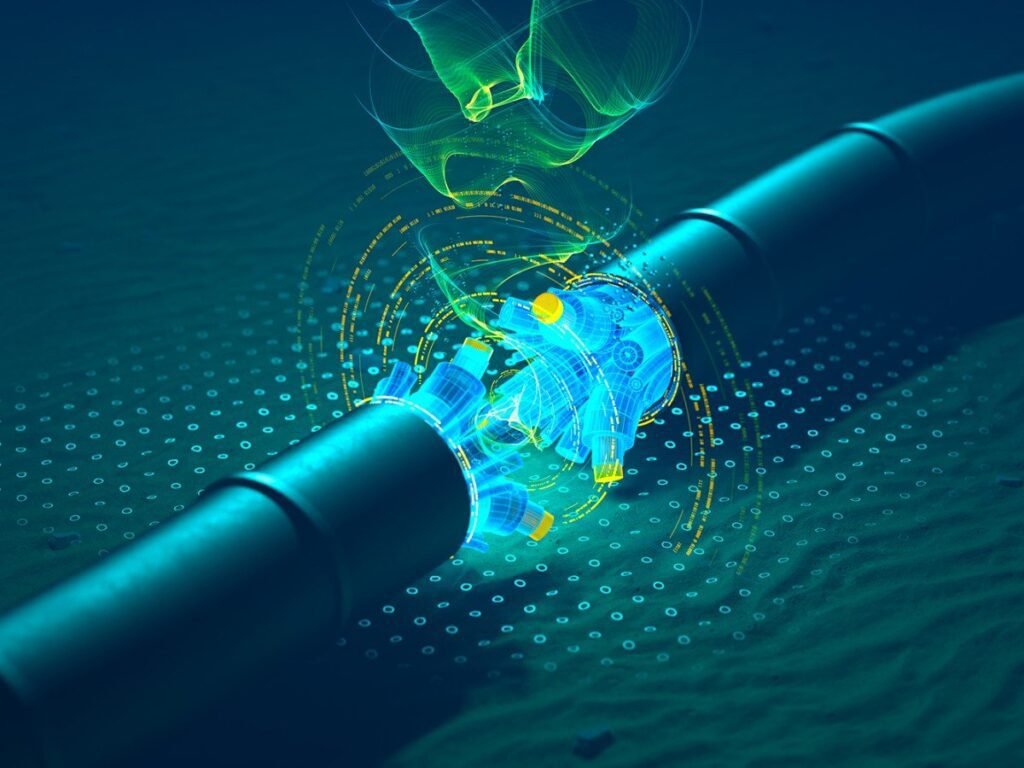
Smarter cables. Integration of AI-powered monitoring and self-healing capabilities to detect faults or reroute data instantly.
Ultimately, these changes are not just about speed. They are about making the global internet more resilient, equitable, and ready for a future powered by artificial intelligence.
Conclusion: The critical mission to support AI’s global growth
The AI boom strains global subsea cable networks, challenging us to rethink how we build and manage the internet’s underwater highways. While operators are moving quickly to open new ocean routes and boost capacity, it is a race against time.
For businesses, consumers, and governments alike, the stakes are high. Without decisive action, we risk a future of slow connections, regional inequalities, and even security vulnerabilities. But with thoughtful planning and innovation, we can build a more robust, future-proof global network, one capable of supporting the vast potential of AI and beyond.
Follow us on Instagram: UAE STORIES
Read More: Exciting partnership: Amazon Payment Services joins Tamara BNPL in GCC